AFFILIATE AI — Frequently Asked Questions
If you’ve been researching ways to earn income online, you’ve likely encountered the term “Affiliate AI” by now. Perhaps you’ve seen claims about AI-powered systems that generate passive income, or advertisements promising that artificial intelligence can transform your affiliate marketing results overnight. If those promises seem too good to be true, your instincts are serving you well.
This guide exists because skepticism is healthy in the online marketing space. Countless programs have used buzzwords like “revolutionary,” “game-changing,” and “AI-powered” to market products that deliver little actual value. Some are outright scams designed to separate you from your money. Others are legitimate tools wrapped in marketing hype that overpromises results.
My goal here is straightforward: to give you the information you need to make your own informed decisions. You’ll learn what AI actually does in affiliate marketing, how to distinguish genuine opportunities from manipulative programs, what tools have proven track records, and what realistic expectations should look like. I’m not selling any program or promising you riches. Instead, I’m equipping you to evaluate the next AI affiliate marketing opportunity you encounter with critical thinking and confidence.
Let’s start by building a foundation of understanding.
Table of Contents
- What Is Affiliate AI? Understanding the Basics
- How AI Is Transforming Affiliate Marketing
- Is Affiliate AI Legitimate? Separating Opportunity from Scam
- Top AI Tools for Affiliate Marketers
- Startup Costs and Realistic Income Expectations
- Do You Need Technical Skills?
- Step-by-Step: Starting AI-Powered Affiliate Marketing
- Biggest Risks and How to Mitigate Them
- The Future of AI in Affiliate Marketing
- AI Search and Featured Snippet Optimization
- Frequently Asked Questions
- Take the Next Step
What Is Affiliate AI? Understanding the Basics
Before evaluating any opportunity claiming to use AI for affiliate marketing, you need a clear understanding of what the term actually means. “AFFILIATE AI” is not a single product or technology—it’s an umbrella category that encompasses various artificial intelligence applications within the affiliate marketing field.
At its core, affiliate marketing involves promoting products or services created by other companies and earning commissions when your promotions result in sales. AI enhances this process through automation, analysis, and content generation. However, the term gets complicated because AI can refer to either a tool you use or a product being sold.
AI as a Tool You Use
This includes the software and platforms you might use to improve your affiliate marketing efforts. Tools like ChatGPT for content creation, SEO platforms with AI features for optimization, and analytics software with machine learning capabilities fall into this category. These are legitimate technologies that can genuinely improve efficiency and results.
AI as a Product Being Sold
Some programs market themselves as “AI systems” that you join as an affiliate. The product being promoted might be an AI tool, a training program, or a business system claiming to use AI. This is where the distinction matters most—you need to evaluate whether the underlying product has genuine value and whether the business model is sustainable.
Key Vocabulary for Evaluating Claims
Understanding these terms helps you cut through marketing noise. When a program claims to use “advanced AI,” you can ask specific questions:
- Machine Learning: Systems that improve through experience and data analysis rather than explicit programming. When a platform claims to “learn” from your results, this refers to machine learning algorithms.
- Natural Language Processing (NLP): The technology enabling AI to understand and generate human language. This powers chatbots, content tools, and voice assistants.
- Automation: Using AI to handle repetitive tasks like scheduling posts, sending emails, or generating reports without manual intervention.
- Predictive Analytics: AI analysis that forecasts future outcomes based on historical data, commonly used for audience targeting and conversion optimization.
Specificity indicates legitimacy; vagueness suggests marketing fluff.
How AI Is Transforming Affiliate Marketing
Legitimate AI applications are genuinely reshaping how affiliate marketers operate. Understanding what’s actually possible helps you set realistic expectations and evaluate claims more effectively.
Content Creation and Enhancement
AI writing tools have become sophisticated enough to assist with various content tasks: generating first drafts for blog posts, creating social media captions, producing email sequences, and developing product descriptions. These tools work by understanding context and generating text that follows patterns learned from vast datasets.
However, AI content has significant limitations. It lacks personal experience, genuine expertise gained through doing, and the authentic voice that resonates with specific audiences. Successful affiliate marketers use AI as a productivity multiplier for initial drafts, then apply their own expertise, personality, and original insights to create content that genuinely serves readers.
Keyword Research and SEO Optimization
AI-powered SEO tools analyze search patterns, competition, and content relevance at scales impossible for humans manually. They can identify keyword opportunities, suggest content improvements, and predict which pages might rank well based on pattern analysis of successful content.
Tools like SurferSEO, Ahrefs, and SEMrush have integrated AI features that provide actionable recommendations. These platforms don’t guarantee rankings—search algorithms remain complex and include factors AI can’t fully capture—but they do make optimization more systematic and evidence-based.
Audience Segmentation and Targeting
Machine learning algorithms can analyze user behavior data to identify patterns and segments. This allows affiliate marketers to understand not just who visits their content, but how different groups interact with it. You might discover that visitors from social media engage differently than those from search engines, or that certain content types resonate strongly with specific demographic segments.
This segmentation enables more relevant promotions and better timing. Rather than showing the same affiliate offers to everyone, you can match content and offers to audience segments based on demonstrated interests and behaviors.
Predictive Analytics for Campaign Optimization
AI systems can analyze historical campaign data to predict which offers will perform best with which audiences, optimal posting times, and which traffic sources are most likely to convert. This predictive capability helps affiliate marketers allocate resources more effectively and test hypotheses before committing significant effort.
Personalization at Scale
From dynamic website content that changes based on visitor behavior to email sequences that adapt based on engagement, AI enables personalization that would be impossible to implement manually for large audiences. A visitor interested in software tools might see different content than one interested in physical products, all managed automatically.
Is Affiliate AI Legitimate? Separating Opportunity from Scam
This question deserves a direct answer: AI as a technology is legitimate and has proven applications in affiliate marketing. However, the affiliate marketing space contains both genuine opportunities and sophisticated scams, and the presence of “AI” in a program’s marketing doesn’t automatically make it trustworthy.
Signs of Legitimate AI Affiliate Marketing
Legitimate AI affiliate marketing involves one or more of the following:
- Promoting actual AI tools (like software subscriptions) that provide genuine value to users
- Using AI tools to enhance your own affiliate marketing efforts more efficiently
- Business models where earning comes primarily from product sales to end users, not from recruiting other affiliates
- Transparent pricing where you understand exactly what you’re paying for and why
- Realistic expectations about timelines and income potential
Red Flags That Signal Scam Potential
Be extremely cautious with programs showing these characteristics:
Guaranteed Income Claims: “Make $10,000 this month guaranteed!” No legitimate business can guarantee income. Results depend on effort, skills, market conditions, and many factors beyond any program’s control.
Heavy Recruitment Pressure: If the primary path to meaningful income requires recruiting other affiliates rather than selling products to customers, you’re looking at a pyramid scheme. Legitimate affiliate marketing rewards product sales.
Vague Technology Explanations: If a program claims to use “proprietary AI” but cannot explain in understandable terms how it actually works, be suspicious. Legitimate products can explain their value proposition clearly.
Missing or Unclear Pricing: Legitimate programs have transparent pricing structures. If you can’t easily understand what you’re paying for, what the ongoing costs are, and what you receive for your money, proceed with extreme caution.
Absence of Real Products: Some schemes sell only the “business opportunity” itself without genuine underlying products. Look for actual products with real utility that customers would purchase regardless of the income opportunity.
Pressure Tactics: Limited-time offers, countdown timers, “only spots remaining”—these high-pressure tactics indicate that the program needs to close you before you have time to research and think critically.
Unverifiable Testimonials: “I made $50,000 in my first month!” with stock photo “success stories” should trigger immediate skepticism. Real testimonials can be researched and verified.
Your Due Diligence Checklist
Before joining any affiliate program, especially those centered on AI:
- Research the company independently—search for reviews, complaints, and regulatory actions
- Verify the product or service exists and has genuine market value
- Understand exactly how you earn money and what activities generate commissions
- Calculate total costs including subscriptions, training, and required purchases
- Check how long the company has operated and whether leadership is publicly identifiable
- Look for regulatory warnings from agencies like the FTC or consumer protection bureaus
- Ask to speak with existing members and verify their experiences independently
Top AI Tools for Affiliate Marketers
For affiliate marketers genuinely interested in leveraging AI, a practical starting point is understanding which tools have established track records. The following categories and recommendations represent tools that affiliate marketers commonly use to enhance their productivity and results.
Content Creation Tools
ChatGPT (Free/Premium)
OpenAI’s language model has become a foundational tool for many affiliate marketers. Use cases include generating content outlines, drafting initial blog post versions, creating social media content, brainstorming ideas, and drafting email sequences. The free version provides substantial capability; the premium version offers faster response times and more consistent quality.
Claude (Free/Premium)
Anthropic’s Claude offers strong content generation capabilities with particular strength in maintaining context over longer conversations. Many affiliate marketers use both ChatGPT and Claude for different tasks, comparing outputs and using each for its strengths.
Jasper (Paid)
Formerly known as Jarvis, Jasper was built specifically for marketing content. It offers templates for various content types, brand voice features, and integrations with other marketing tools. The monthly cost is higher than general-purpose AI tools, but the specialized features can justify the investment for high-volume content creation.
Copy.ai (Free/Premium)
Another marketing-focused option with templates for product descriptions, social posts, email subject lines, and other common affiliate marketing content needs. Good option for those who prefer structured templates over open-ended prompting.
SEO and Optimization Tools
SurferSEO (Paid)
Surfer analyzes top-ranking content for your target keywords and provides detailed recommendations for optimizing your own content. Features include content editor with real-time optimization suggestions, audit tools for existing content, and keyword research capabilities.
Ahrefs (Paid)
A comprehensive SEO suite that has incorporated AI features into its existing strong platform. Offers site audit, keyword research, competitor analysis, and backlink analysis.
SEMrush (Paid)
Similar to Ahrefs with its comprehensive SEO toolkit, SEMrush has added AI-powered features for content optimization and writing assistance.
Analytics and Performance Tools
Google Analytics 4 (Free)
The latest version of Google’s analytics platform incorporates machine learning for insight generation. While the interface has a learning curve, the AI-generated insights and predictive metrics provide valuable information about audience behavior and conversion patterns.
Hotjar (Free/Premium)
Provides heatmaps, session recordings, and user feedback tools that help you understand how visitors actually interact with your content. AI features help identify patterns in user behavior.
Email Marketing with Automation
Mailchimp (Free/Premium)
Widely used email platform that has incorporated AI features for send time optimization, subject line testing, and audience segmentation.
ConvertKit (Free/Premium)
Designed specifically for creators and includes features particularly relevant for affiliate marketers: visual automation builders, landing page templates, and subscriber tagging based on behavior.
Social Media and Scheduling
Buffer (Free/Premium)
Social media scheduling tool that has added AI features for content suggestions and optimal posting times.
Later (Paid)
Instagram-focused scheduling with visual content calendar and AI-powered hashtag suggestions.
Startup Costs and Realistic Income Expectations
One of the most important questions for anyone considering affiliate marketing is the financial reality: What does it cost to start, and what can you realistically earn? Honesty here protects you from both scams that overpromise and from your own unrealistic expectations.
Understanding Startup Costs
Affiliate marketing costs exist on a spectrum from minimal to substantial, depending on your approach and ambition.
Minimum Viable Setup (Potentially Under $100/year)
- Domain registration: approximately $10-15/year
- Basic shared hosting: approximately $50-100/year
- Free AI tools (ChatGPT, Claude): $0
- Free email marketing platform: $0
- Free analytics: $0
This setup works for learning and experimentation. It has limitations in speed, features, and scalability, but demonstrates that legitimate affiliate marketing doesn’t require large upfront investment. Note that actual costs vary by provider and promotional offers.
Moderate Professional Setup (Approximately $500-$1,500/year)
- Quality hosting: approximately $100-300/year
- Paid AI writing tools: approximately $100-400/year
- SEO tool subscription: approximately $100-400/year
- Email marketing platform: approximately $100-200/year
- Basic design tools: approximately $50-100/year
This range represents a professional setup that doesn’t constrain your growth while remaining accessible. Most serious affiliate marketers eventually operate in this range.
Comprehensive Setup ($2,000-$5,000+)
Includes premium tools across categories, potentially advertising budget for testing, professional design or development, and advanced automation. This level makes sense once you’ve proven your model and need optimization, not as a starting point.
Warning About High-Cost Programs
Be extremely cautious of affiliate programs requiring thousands of dollars to join. Legitimate affiliate marketing allows you to start small and scale based on results. Programs charging high entry fees are often making money from recruits rather than from actual product sales.
Realistic Income Benchmarks
Income in affiliate marketing follows a pattern that holds across most niches: minimal results initially, gradual growth with consistent effort, and potential for significant income over extended periods. The following represents ranges reported by affiliate marketing communities and industry observers, though individual results vary substantially based on niche, effort quality, and market conditions.
Months 1-3: Learning Phase
In this initial phase, many beginners earn between $0 and $50, though some earn nothing and a small percentage may earn more depending on their niche and approach. You’re learning platforms, building initial content, and establishing basic infrastructure. Earnings at this stage represent proof-of-concept more than income.
Months 4-6: Foundation Building
With consistent effort, earnings often reach $50-200/month, though this varies significantly by niche and approach. You’re developing your voice, understanding what resonates with your audience, and beginning to see which promotional approaches work.
Months 7-12: Early Results
$100-500/month represents a reasonable expectation for those who remain consistent through this phase. You’ve likely found a few content pieces or promotional approaches that outperform others. Email list building becomes more effective. The foundation established earlier begins generating compounding returns.
Year 2 and Beyond
$500-5,000+ monthly is achievable with sustained effort, good niche selection, and continuous optimization. Some affiliate marketers reach five-figure monthly income, though this typically requires multiple years of consistent work, often multiple successful properties, and significant learning along the way.
Factors Affecting Your Income
Income varies dramatically based on niche selection (some niches have much higher commission values), traffic quality and volume, content quality and SEO strength, conversion optimization skills, consistency and persistence, and time invested.
The honest answer to “how much can I make?” is: it depends entirely on your specific situation, effort, and circumstances. Anyone telling you a specific guaranteed number is either lying or deceived.
Do You Need Technical Skills?
A common barrier to entry that concerns beginners is the perceived technical requirements of affiliate marketing, especially when AI is involved. Let me address this directly: modern affiliate marketing with AI tools has dramatically lowered the technical barrier, but specific skills still matter.
What You Don’t Need
- Programming or coding knowledge
- Data science expertise
- Computer science degree
- Advanced mathematics or statistics
- Network administration or IT skills
What You Actually Need
Basic Digital Literacy
Comfort using computers, navigating websites, creating accounts, uploading content, and following tutorials. If you can use email, browse the web, and create documents, you have sufficient baseline skills.
Willingness to Learn
More important than existing skills is the commitment to continuously learn. The affiliate marketing landscape evolves, tools change, and what works today might shift tomorrow. Your ability to adapt and learn trumps any specific technical knowledge you start with.
Basic Writing Ability
You don’t need to be a professional writer, but you need to communicate clearly. AI tools can assist with writing, but you must be able to review, edit, and add your own perspective. Poor fundamental writing produces poor AI-assisted writing.
Understanding of Social Media Basics
Knowing how platforms work, basic posting etiquette, and how to engage authentically matters.
Fundamental SEO Concepts
Understanding how search engines work at a basic level, knowing why quality content matters, and learning about keywords, headings, and link building.
Analytical Thinking
Being able to look at results, identify patterns, and adjust based on what the data tells you. This is more about mindset than technical skill.
How AI Tools Lower Technical Barriers
Modern AI tools are specifically designed for non-technical users. Natural language interfaces mean you ask questions in plain English rather than writing code. Visual dashboards present complex data in understandable formats. Drag-and-drop builders let you create websites and email sequences without programming.
Learning Paths for Beginners
If you’re starting from minimal technical background:
- Start with one platform thoroughly—WordPress, YouTube, or social media—before spreading yourself thin
- Complete free tutorials for any tool before paying for advanced courses
- Practice with small experiments rather than big launches
- Join communities where you can ask questions and learn from others’ experiences
- Keep a learning journal documenting what you discover
- Accept that mistakes are part of the learning process
Many successful affiliate marketers started with no technical background whatsoever. They succeeded through persistence, learning, and genuine value creation for their audiences—not through technical prowess.
Step-by-Step: Starting AI-Powered Affiliate Marketing
For those ready to move from research to action, here’s a practical roadmap for starting affiliate marketing with AI assistance. This isn’t a get-rich-quick guide—it’s a structured approach that builds sustainable capability over time.
Phase 1: Foundation (Weeks 1-4)
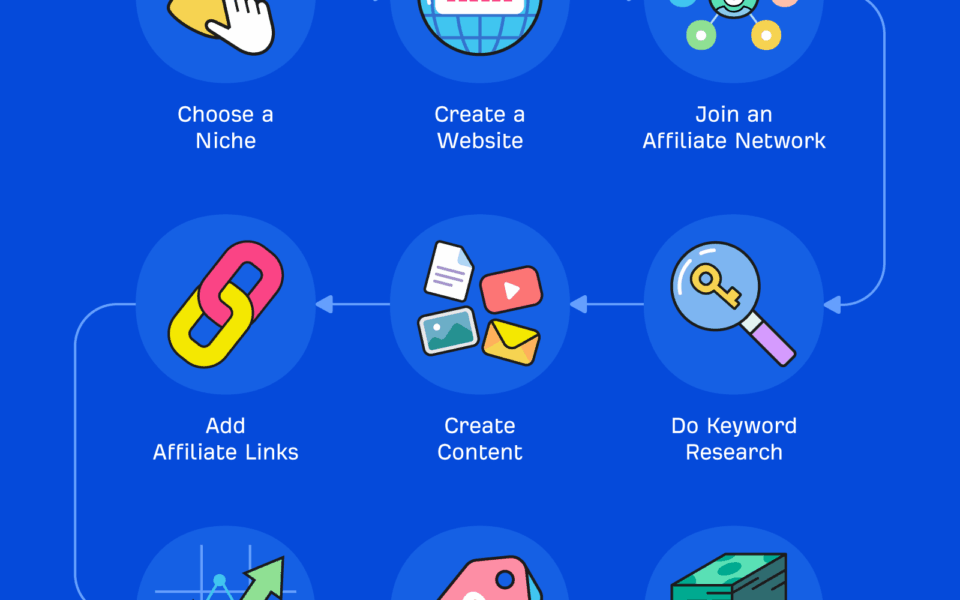
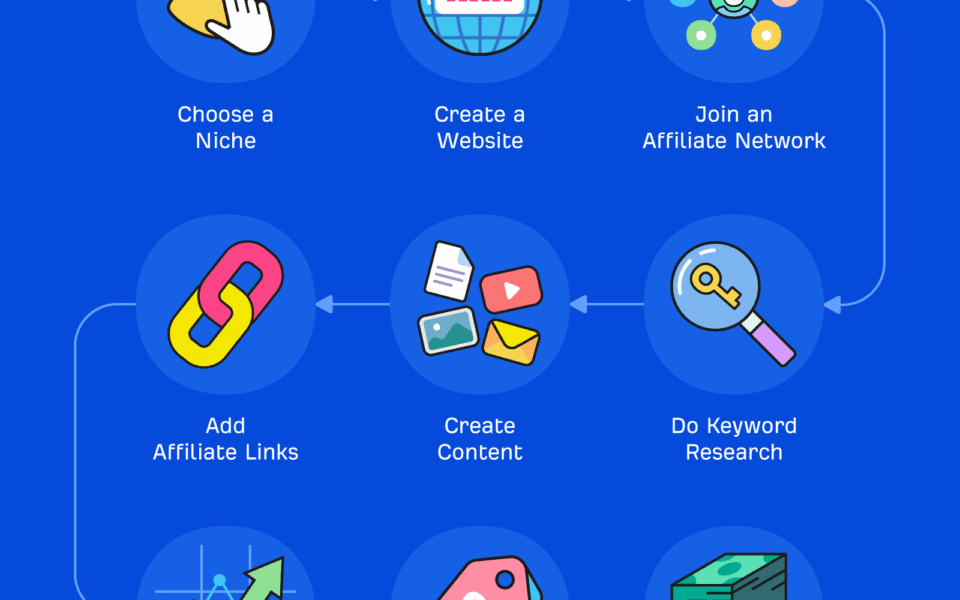
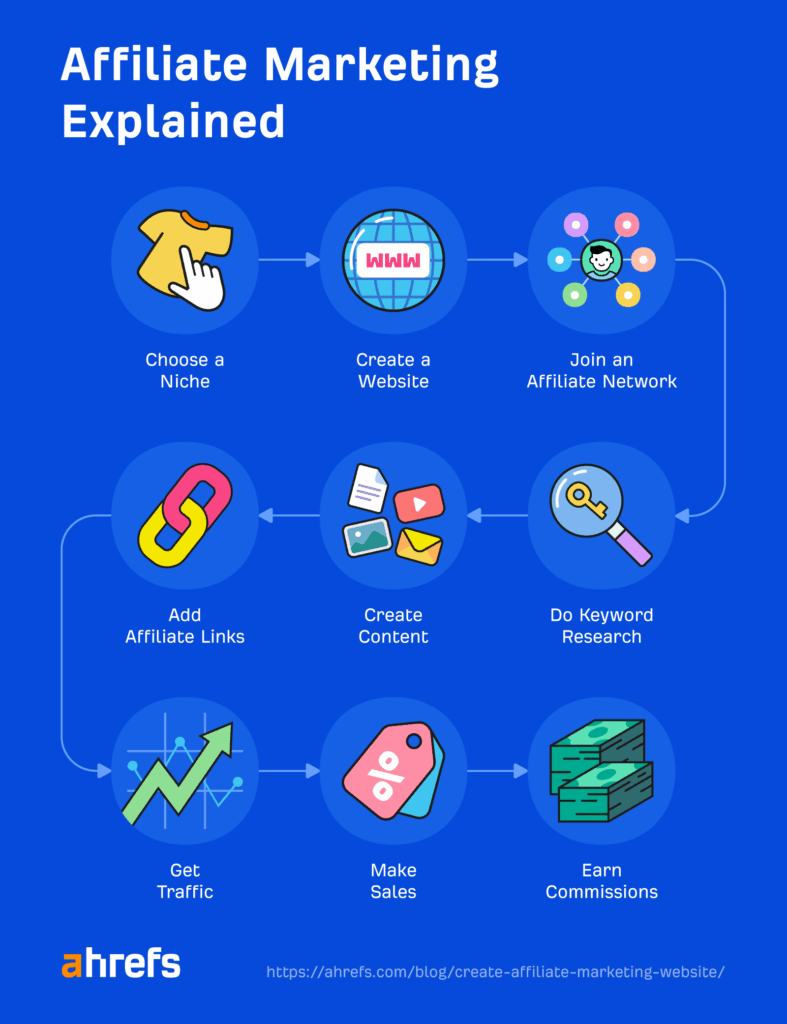
Step 1: Choose Your Niche
Select a topic area where you’ll create content and promote affiliate offers. Effective niches balance personal interest or knowledge, audience demand (people actively searching for information), and affiliate opportunity (products with meaningful commissions exist).
Step 2: Research Affiliate Programs
Before building anything, verify that profitable affiliate programs exist in your niche. Major networks like Amazon Associates, ShareASale, and CJ Affiliate cover many niches. Research individual company programs as well. Consider commission rates, cookie durations, payment thresholds, and program reputation.
Step 3: Set Up Your Platform
Create your primary content platform. For most beginners, a blog or website using WordPress provides the best foundation. Alternatives include YouTube channels, podcasts, or social media-focused approaches. Each has different strengths—choose based on your content preferences and audience habits.
Phase 2: Implementation (Weeks 5-12)
Step 4: Integrate AI Tools
Set up your AI assistance stack. Start with ChatGPT or Claude for content assistance, a basic SEO tool, and your email marketing platform. Focus on learning these tools deeply rather than collecting many tools superficially.
Step 5: Create Initial Content
Begin producing content systematically. Quality matters more than quantity, but you need enough content to establish presence and gather data about what resonates. Aim for 8-12 substantial pieces in your first two months.
Step 6: Implement Basic SEO
Apply fundamental SEO principles to all content: appropriate heading structure, natural keyword usage, internal linking, fast page speed, and mobile responsiveness.
Phase 3: Growth (Months 4-6)
Step 7: Build Your Email List
Email marketing remains one of the most effective channels for affiliate income. Create lead magnets (free resources that require email signup), set up email capture on your site, and begin building relationships with subscribers through valuable content.
Step 8: Drive Traffic
Expand beyond initial content. Explore social media promotion, guest posting opportunities, community engagement, and potentially paid advertising once you’ve proven conversion rates.
Step 9: Optimize Based on Data
Review analytics regularly. Identify which content performs best, which affiliate products convert well, and which traffic sources provide quality visitors.
Phase 4: Scaling (Months 7-12)
Step 10: Scale What Works
Create more content in proven formats and topics. Expand successful promotional approaches. Consider adding complementary platforms once your primary channel is established.
Step 11: Diversify Income Streams
Beyond basic affiliate commissions, explore additional monetization: display advertising, sponsored content, digital products, or premium content offerings.
Timeline Expectations
Most people following this roadmap will see first affiliate commissions within 3-6 months, meaningful monthly income (>$100) within 6-12 months, and consistent income generation after 12-18 months of persistent effort. These are realistic averages—individual results vary based on niche, effort quality, and factors beyond your control.
The key milestones to watch: first content published, first search traffic, first email subscribers, first commission, first consistent traffic patterns, and first evidence of compounding growth.
Biggest Risks and How to Mitigate Them
Affiliate marketing with AI carries specific risks that informed practitioners prepare for. Understanding these risks helps you make better decisions and build more resilient businesses.
Market Saturation
The barrier to entry for affiliate marketing has lowered significantly, meaning more competition in most niches. Standing out requires differentiation that AI alone cannot provide.
Mitigation: Focus on specialized niches rather than broad general topics. Build genuine expertise and authentic voice. Prioritize quality and depth over volume. Create content that demonstrates actual experience and provides unique perspectives AI cannot replicate.
Overreliance on AI Content
AI-generated content has become prolific, leading search engines to develop better detection methods and potentially devalue low-quality AI content. Overdepending on AI without human oversight leads to generic, unremarkable content that fails to rank or convert.
Mitigation: Use AI as an assistant, not an author. Always add personal expertise, original research, unique examples, and genuine perspective. Edit AI drafts thoroughly rather than publishing them directly.
SEO Penalties and Algorithm Changes
Search engines regularly update their algorithms, sometimes dramatically. Content that ranks well today might lose visibility tomorrow. Relying entirely on organic search traffic creates vulnerability to these changes.
Mitigation: Diversify traffic sources—build email lists, develop social media presence, explore multiple platforms. Don’t depend solely on any single traffic source. Build genuine audience relationships that persist regardless of search rankings.
Platform Dependency
Social media platforms change algorithms, shut down features, or disappear entirely. Programs you’re promoting might change commission structures or terminate affiliate relationships.
Mitigation: Own your platform and audience data—maintain your own website and email list rather than depending entirely on third-party platforms. Maintain multiple affiliate relationships so losing one program doesn’t devastate your income.
Regulatory Changes
AI-generated content disclosure requirements, affiliate disclosure regulations, and privacy laws are evolving. Non-compliance creates legal and reputational risk.
Mitigation: Always include proper affiliate disclosures as required. Stay informed about regulatory developments in your jurisdiction. When in doubt about AI content disclosure requirements, be transparent proactively.
Misalignment Between Hype and Reality
The AI space generates constant hype about revolutionary capabilities. This creates pressure to adopt every new tool and technique, potentially leading to scattered effort and wasted resources on trends that don’t deliver results.
Mitigation: Evaluate new tools and trends critically before adopting. Newer isn’t always better. Maintain focus on proven fundamentals rather than chasing every shiny object.
Financial Risk
Any business investment carries financial risk. Tool subscriptions, advertising costs, and time investment represent resources that might not generate proportional returns.
Mitigation: Start lean and prove concepts before scaling investments. Track ROI on all spending. Set clear thresholds for when to continue versus abandon investments. Never invest more than you can afford to lose.
Burnout and Unrealistic Expectations
The gap between expectations set by marketing hype and the reality of gradual progress leads many