AFFILIATE AI — Part 32: A Compliance-First Guide to Ethically Integrating AI into Your Affiliate Marketing Workflow
Welcome to Part 32 of our ongoing AFFILIATE AI series. If you’re new here, Parts 1 through 31 have covered everything from AI basics to advanced automation strategies, SEO optimization, and performance analytics.
Published: | Last Updated:
Author: AFFILIATE AI Editorial Team
Introduction: Why AI Is No Longer Optional for Affiliate Marketers
The affiliate marketing landscape has shifted dramatically. What once required hours of manual research, drafting, and optimization can now be accelerated through AI-powered tools—provided you use them responsibly.
AI isn’t here to replace authentic marketing. It’s here to amplify your capacity while maintaining the trust your audience deserves.
This guide walks you through ethically integrating AI into every stage of your affiliate workflow. We cover content creation, performance measurement, FTC compliance, and quality control. By the end, you’ll have a repeatable system that boosts productivity without compromising integrity.
1. The AI Landscape for Affiliate Marketers
AI has moved beyond novelty and into necessity. Here’s why it matters now:
Current AI Trends Reshaping Affiliate Marketing
- Generative AI for Content: Large language models can produce drafts for product reviews, comparison tables, and how-to guides in minutes rather than hours.
- AI-Powered SEO: Tools now analyze top-ranking pages and suggest optimizations that align with search engine algorithms in real time.
- Hyper-Personalization: Recommendation engines deliver product suggestions based on user behavior, increasing click-through rates and conversions.
- Voice and Visual Search: AI is optimizing content for conversational queries and image-based discovery, opening new traffic channels.
Where Part 32 Fits in Your AI Journey
While previous parts explored specific tools and strategies in isolation, Part 32 serves as your implementation blueprint. We connect the dots between AI capabilities, ethical usage, compliance requirements, and measurable outcomes.
Related reading: Part 31: Advanced AI Analytics | Part 30: AI-Powered SEO Strategies
2. Core AI Tools for Content Creation & Optimization
Selecting the right tools is the first step. Here’s an evaluation of the most relevant options for affiliate marketers:
AI Writing Assistants
Jasper
Jasper excels at generating long-form content like product reviews and comprehensive guides. Its templates include “Product Review” and “Compare Topics” modes specifically designed for affiliate sites.
Use case: Generate a first draft of a “Best Wireless Earbuds Under $100” review by inputting product features and target keywords.
Note: Jasper requires human editing before publication to ensure accuracy and brand voice alignment.
Copy.ai
Copy.ai offers quick turnaround for shorter assets like social posts, email sequences, and ad copy. Its strength lies in rapid ideation and variation generation.
Use case: Create multiple variations of an affiliate call-to-action to test which messaging resonates with your audience.
OpenAI’s ChatGPT
ChatGPT provides conversational drafting capabilities and can assist with research summarization, outline creation, and iterative refinement. Its versatility makes it a versatile tool for affiliate workflows.
Use case: Ask ChatGPT to summarize specifications from multiple product pages into a cohesive comparison section.
SEO Optimization Tools
Surfer SEO
Surfer analyzes top-performing pages for your target keywords. It provides content structure recommendations, heading suggestions, and keyword density guidelines.
Use case: Enter your target keyword “best running shoes for flat feet” and receive an outline that incorporates high-ranking semantically related terms.
AI-Powered Keyword Research Platforms
Tools like SEMrush’s AI Keyword Tool and Ahrefs’ AI features help identify long-tail opportunities and question-based queries that align with affiliate intent.
Use case: Discover “what to look for in hiking boots for ankle support” as a question keyword to target in a buying guide.
AI Tools Comparison
| Tool | Primary Use | Best For | Considerations |
|---|---|---|---|
| Jasper | Long-form content generation | Product reviews, comprehensive guides | Requires significant editing |
| Copy.ai | Short-form copy | Social posts, email, ad copy | Quick ideation and variations |
| ChatGPT | Versatile assistance | Research, outlines, drafting | Verify all factual claims |
| Surfer SEO | On-page optimization | Content structure, keyword analysis | Guidelines, not rules |
| SEMrush/Ahrefs | Keyword research | Finding opportunities | Requires subscription |
Emerging Generative Platforms
Keep an eye on newer entrants that specialize in e-commerce descriptions, video script generation, and automated data extraction from product databases. These tools complement your existing stack by handling niche-specific tasks.
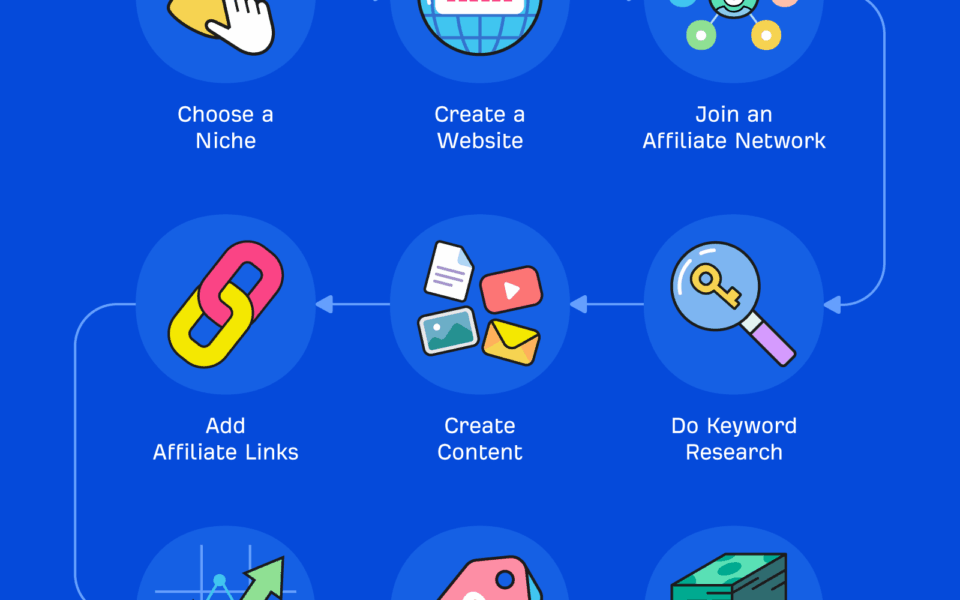
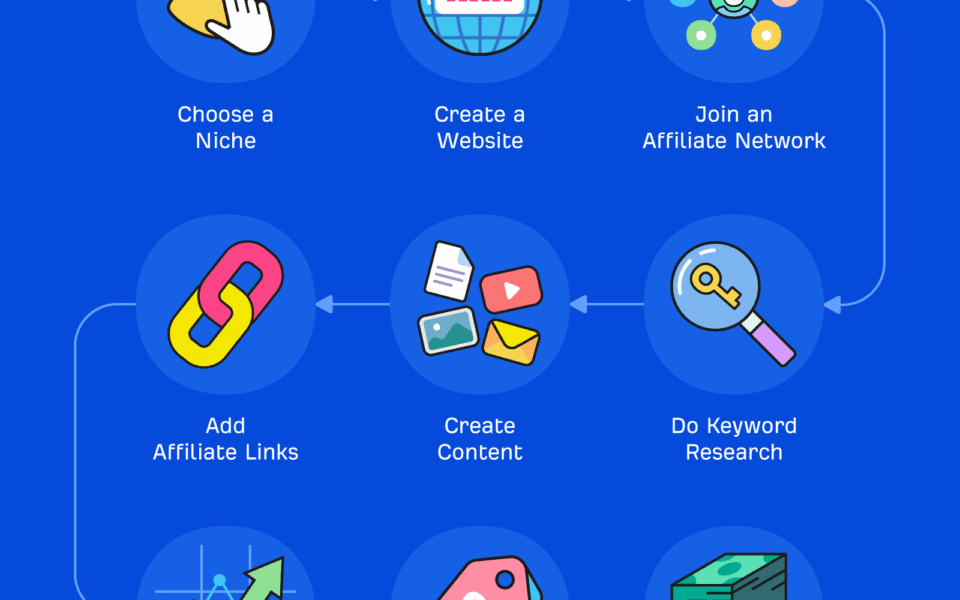
3. Building an AI-Driven Content Pipeline: Step-by-Step
Follow this repeatable workflow to integrate AI ethically at every stage:
Step 1: Keyword Research with AI
- Input seed keywords into your AI research tool.
- Generate a list of related terms, questions, and comparison queries.
- Filter for commercial intent keywords (e.g., “best,” “reviews,” “vs,” “under $X”).
- Prioritize keywords based on search volume, competition, and affiliate program availability.
Step 2: AI-Assisted Outlining
Use ChatGPT or Jasper to create a content structure based on your target keyword and top-ranking competitors. Request headers, subheaders, and suggested word counts for each section.
Example prompt: “Create an outline for a review of the top 5 noise-canceling headphones under $200. Include an introduction, individual product sections with pros/cons, a comparison table, and a conclusion with buying recommendations.”
Step 3: AI-Assisted Drafting
Generate initial drafts using your chosen AI writing tool. Feed it your outline, target keywords, and key product specifications.
Important: Review the output carefully for accuracy, tone, and brand alignment before proceeding.
Step 4: SEO Enhancement
Run your draft through Surfer SEO or a similar tool. Implement recommendations for header usage, keyword placement, internal linking, and content length.
Ensure your affiliate disclosures are prominently placed near any affiliate links.
Step 5: Editorial Review
Human editors review the content for:
- Factual accuracy of product claims
- Authentic voice and readability
- Proper FTC disclosure placement
- Natural integration of affiliate links
FTC-Compliant Disclosures at Each Stage
Add disclosures early in your workflow to ensure they’re never omitted. Per the FTC Endorsement Guides (16 CFR Part 255), disclosures must be clear and conspicuous.
- Within content: “This page contains affiliate links. We may earn a commission at no extra cost to you.”
- Near affiliate links: Use phrases like “Check current price on Amazon” with embedded disclosure.
- In metadata: Include disclosure language in page descriptions where applicable.
4. Personalization & Engagement with AI
AI can transform static affiliate pages into dynamic, personalized experiences that drive higher engagement and conversions.
AI Chatbots for Affiliate Sites
Implement chatbots on product pages or review sites to answer visitor questions in real time. These bots can:
- Guide users to the best product based on their needs
- Provide additional product specifications on request
- Display current pricing and availability
Example: A chatbot asks “What’s your budget?” and “Do you prefer iOS or Android?” before recommending a specific smartphone with an affiliate link.
Recommendation Engines
Use AI to analyze user behavior and display related product recommendations. On a WordPress site, plugins can track page views and suggest complementary items. On Shopify, built-in AI recommendations surface related products naturally.
Affiliate networks to explore: Amazon Associates, ShareASale, CJ Affiliate, and Awin offer various AI-compatible features.
Dynamic Content Blocks
Create content blocks that change based on user segments:
- Returning visitors: Show “Recently viewed products” blocks with affiliate links.
- New visitors: Display top-rated products with brief summaries.
- Geo-targeted users: Highlight region-specific pricing or availability.
Staying Transparent
Always inform users when they’re interacting with AI-powered features. A simple “Powered by AI” badge or “Personalized for you” label builds trust and meets ethical standards.
5. Measuring ROI: AI-Enhanced Analytics & CRO
AI’s value must be quantifiable. Here’s how to measure the impact of your AI implementations:
Setting Baseline Metrics
Before deploying AI, record these baseline metrics:
- Organic traffic (sessions, users)
- Conversion rate (affiliate clicks to purchases)
- Time-to-publish per article
- Cost-per-output (editing time, tool subscriptions)
- Average affiliate revenue per visitor
Tracking AI-Assisted Content
Use utm_content parameters to tag AI-generated or AI-assisted content in Google Analytics:
Example: Append ?utm_content=ai-assisted to affiliate links in AI-drafted posts. Create a custom dimension to compare performance against human-written content.
Learn more about Google Analytics campaign tracking.
AI-Powered Dashboards
Platforms like Google Analytics 4 offer AI-driven insights that identify traffic patterns and conversion opportunities. Connect your affiliate data to dashboards that visualize:
- Top-performing AI-generated pages
- User journey paths leading to conversions
- Anomalies in traffic or revenue
Attribution Models
Use data-driven attribution to credit AI-assisted touchpoints appropriately. This ensures you understand which AI interventions (content generation, personalization, chatbots) contribute most to conversions.
Key Performance Indicators for AI
- Content velocity: Track articles published per week to measure production efficiency gains.
- Cost reduction: Measure editing and production time saved.
- Conversion lift: Monitor changes in affiliate click-through rates after implementing personalization.
- Quality maintenance: Verify consistent or improved search rankings for AI-assisted content.
6. Ethics, Disclosure & FTC Compliance
Compliance isn’t optional—it’s the foundation of sustainable affiliate marketing with AI.
Understanding FTC Guidelines
The Federal Trade Commission requires that all affiliate relationships be clearly disclosed. This applies regardless of whether humans or AI created the content. Key requirements from the FTC Endorsement Guides include:
- Disclosure must be clear and conspicuous, not buried in fine print.
- It must appear before any affiliate link or purchase action.
- It must be understandable to an average consumer.
Required Disclosures for AI-Generated Material
When AI assists in content creation, add language such as:
- “This review was written with AI assistance and reviewed by our editorial team.”
- “AI-generated content disclaimer: Some product descriptions were created using AI tools.”
These disclosures signal transparency and help you meet both FTC requirements and search engine quality guidelines.
Best Practices for Staying Compliant
- Maintain a disclosure policy page accessible from your footer.
- Include disclosures in your content templates.
- Train any contributors or editors on FTC requirements.
- Keep records of AI tool usage, prompts, and human review processes.
- Review FTC updates quarterly, as guidelines evolve with technology.
7. Quality Control & Risk Mitigation
AI accelerates production, but human oversight remains essential for quality and compliance.
Multi-Layer Review Process
- Initial AI Draft: Generate content using your chosen tool.
- Plagiarism Scan: Run output through Copyscape, Quetext, or Grammarly to ensure originality.
- Factual Verification: Cross-check product claims, prices, and specifications against official sources.
- Editorial Rewrite: Add your authentic voice, anecdotes, and insights.
- SEO Check: Verify keyword usage, meta descriptions, and internal linking.
- Final Approval: Senior editor reviews for compliance and brand alignment.
Quality Thresholds
Set minimum standards before publishing. These thresholds help maintain consistency across AI-assisted content:
- Readability: Target a reading level appropriate for your audience.
- Originality: Ensure high originality scores on plagiarism checkers.
- Word count: Meet or exceed top-ranking competitors for target keywords.
- Factual accuracy: Zero errors in product specifications or pricing.
Bias Audits
AI can inadvertently favor certain brands or products based on training data. Conduct bias audits by:
- Reviewing AI recommendations for patterns (e.g., always recommending products from certain merchants).
- Ensuring your product selection reflects genuine editorial judgment.
- Documenting why specific products were chosen for coverage.
Regular Content Audits
Schedule quarterly reviews of published AI-assisted content to:
- Update outdated product information
- Refresh old SEO optimizations
- Verify ongoing FTC compliance
- Identify content that underperforms and needs revision
Risk Mitigation Checklist
- Always use plagiarism detectors before publishing
- Verify all affiliate links function correctly
- Confirm disclosures appear correctly on mobile and desktop
- Monitor for AI hallucinations (fabricated facts) in drafts
- Limit AI’s role in claims that require specialized expertise (e.g., health, finance)
8. Emerging Trends & Future Outlook
Stay ahead of the curve by understanding where AI is heading in affiliate marketing.
Generative AI Advancements
Models are becoming better at producing whole product reviews, including synthesized testing data and comparison matrices. Expect tools that can:
- Pull real-time pricing and availability from affiliate networks
- Generate comparison tables automatically from structured product data
- Create video scripts optimized for affiliate-driven YouTube channels
AI-Generated Search Snippets
Search engines are experimenting with AI-generated answers at the top of results. This may reduce traditional organic clicks but opens opportunities for structured content that gets featured. Optimize for this by:
- Using structured data (Schema markup) on product reviews
- Providing clear, concise answers to common questions
- Maintaining high E-E-A-T signals (Experience, Expertise, Authoritativeness, Trustworthiness)
Voice Assistant Integration
As voice search grows, affiliate marketers must optimize for conversational queries. AI can help by:
- Generating FAQ sections written in natural, spoken language
- Creating content targeting question-based keywords
- Developing audio-friendly product summaries for podcast integration
Preparing Your Strategy
To future-proof your affiliate business:
- Build a diverse traffic portfolio (search, social, email, voice).
- Maintain authentic audience relationships that transcend algorithm changes.
- Invest in quality content that provides value beyond transactional recommendations.
- Stay informed about AI policy changes from search engines and regulatory bodies.
9. Quick-Start Checklist & Next Steps
Implement these actionable tasks to begin your compliance-first AI integration today:
Your Immediate Action Items
- Audit your current workflow: Identify three stages where AI can add value without replacing human judgment.
- Select one AI tool: Start with ChatGPT or Jasper for content drafting.
- Create a disclosure template: Add FTC-compliant language to your content templates.
- Set up utm tracking: Tag AI-assisted content in Google Analytics.
- Establish quality thresholds: Define minimum standards for readability, originality, and accuracy.
- Train your team: Ensure editors understand AI capabilities and limitations.
- Schedule regular audits: Set quarterly reminders for content and compliance reviews.
Iterative Testing
Don’t deploy AI across your entire site at once. Test on a subset of pages, measure results, refine your process, then scale gradually.
What’s Coming in Part 33
Part 33 will dive deeper into advanced AI automation workflows. We’ll explore automated outreach sequences, predictive analytics for product selection, and case studies from affiliate marketers implementing AI at scale.
Continue the Conversation
Join our community of affiliate marketers sharing AI strategies, compliance tips, and success stories. Browse the full AFFILIATE AI series for more insights.
Key Takeaways
- Use AI as a productivity accelerator, not a replacement for editorial judgment.
- Maintain FTC compliance by disclosing both affiliate relationships and AI assistance prominently.
- Measure ROI through baseline metrics, proper campaign tracking, and analytics dashboards.
- Implement rigorous quality control with plagiarism checks, factual verification, and bias audits.
- Stay forward-looking by monitoring emerging AI trends and preparing your strategy accordingly.
Frequently Asked Questions
What AI tools can improve my affiliate content creation and optimization?
Leading tools include Jasper and Copy.ai for high-volume copy, OpenAI’s ChatGPT for conversational drafting, and Surfer SEO for on-page optimization. AI-powered keyword research platforms like SEMrush’s AI Keyword Tool can accelerate keyword discovery. These tools can enhance drafting, improve SEO, and personalize user experiences while maintaining quality when paired with human review.
How do I ethically integrate AI into my existing affiliate workflow?
Start by mapping each workflow stage—research, drafting, editing, publishing—and identify where AI adds value without replacing human judgment. Use AI for ideation, keyword clustering, and first-draft generation, then apply rigorous editorial oversight. Always disclose AI assistance per FTC guidelines, and keep a log of AI usage for transparency.
What are the latest AI trends affecting affiliate marketing?
Key trends include generative AI models that produce whole product reviews, AI-driven voice search optimization, hyper-personalized recommendation engines, and automated outreach tools. Additionally, AI-generated structured data snippets are beginning to appear in search results, reshaping click-through dynamics.
How can I measure the ROI and performance gains from AI implementations?
Set baseline metrics—organic traffic, conversion rate, time-to-publish—before deploying AI. Use Google Analytics custom dashboards to track changes in these KPIs. Implement utm_content parameters for AI-assisted content to isolate its impact. Compare cost-per-output before and after automation. A positive shift in conversion rate paired with reduced production time indicates ROI.
What compliance and disclosure requirements must I follow when using AI-generated content?
The FTC requires clear, conspicuous disclosures that material is sponsored or contains affiliate links, regardless of whether it was created by humans or AI. Per FTC Endorsement Guides (16 CFR Part 255), you must disclose material connections. If AI generates the core copy, you should also label the content as “AI-generated” or “AI-assisted” and ensure the affiliate relationship is disclosed prominently before any purchase action.
What are the common pitfalls and risks of AI adoption in affiliate marketing?
Pitfalls include publishing inaccurate or plagiarized AI content, which can damage trust and potentially violate Google’s helpful content guidelines. Other risks: failing to disclose AI assistance (risking FTC penalties), over-automation that erodes authentic brand voice, data-privacy issues when AI tools process user information, and AI bias that skews product recommendations or keyword suggestions.
How do I avoid low-quality AI output and maintain high content standards?
Adopt a multi-layer review process: initial AI draft, plagiarism scan, factual verification, editorial rewrite, final SEO check. Use a style guide specific to your niche, set minimum quality thresholds for readability and originality, and run regular content audits. Incorporate human anecdotes and insights to preserve authenticity.
Conclusion
Integrating AI into your affiliate marketing workflow isn’t about replacing human creativity—it’s about amplifying your capacity to produce high-quality, compliant, and effective content. The key takeaways from Part 32 are straightforward:
- Use AI as a productivity accelerator, not a replacement for editorial judgment.
- Maintain FTC compliance by disclosing both affiliate relationships and AI assistance prominently.
- Measure ROI through baseline metrics, proper tracking parameters, and analytics dashboards.
- Implement rigorous quality control with plagiarism checks, factual verification, and bias audits.
- Stay forward-looking by monitoring emerging AI trends and preparing your strategy accordingly.
The checklist provided in this guide gives you an immediate starting point. Pick one workflow stage to optimize with AI today, measure the results, and expand from there. Your audience expects authentic, valuable recommendations—and AI can help you deliver them at scale without sacrificing integrity.
Part 33 will explore advanced AI automation and real-world case studies that demonstrate measurable ROI. Until then, keep testing, keep learning, and keep building an affiliate business that thrives on trust and transparency.
Continue reading: Part 33: Advanced AI Automation Workflows