Portable Power Hub Reviews: A Comprehensive Guide for U.S. Consumers
Editorial Note: This article has been revised to include verified evidence for all factual claims. All citations reference the evidence pack provided, and claims are distinguished from general guidance.
—
Introduction: The Growing Importance of Portable Power Solutions
The portable power market has undergone significant transformation as American consumers increasingly prioritize reliable backup energy solutions. Several converging factors drive this trend: the growing frequency of extreme weather events affecting grid reliability, the normalization of remote work arrangements, and the proliferation of electronic devices requiring consistent power access. [3]
Portable power stations and charging solutions have evolved from niche outdoor equipment into mainstream options for U.S. households, particularly those in regions prone to grid strain from weather events. Understanding what portable power solutions can—and cannot—provide is essential for making informed purchasing decisions. [5]
This review examines the portable power hub category, providing guidance for U.S. consumers evaluating these products for emergency backup, outdoor recreation, or professional applications.
Understanding the Portable Power Hub Market
Market Overview and Size
The 12V DC Power Hub market represents a substantial and growing sector within the broader portable power industry. According to market research, the global market size reached USD 2.1 billion in 2024, demonstrating robust growth driven by increasing demand for portable and reliable power solutions across various sectors. [2]
The market is projected to expand at a compound annual growth rate (CAGR) of 7.2% during the forecast period, with market size expected to reach USD 3.9 billion by 2033. [2] This expansion is primarily fueled by the surge in adoption of electronic devices, the rise in off-grid and outdoor activities, and the growing need for efficient power management solutions in automotive, marine, and industrial applications. [2]
Product Categories
The 12V DC Power Hub market encompasses several product types designed to meet diverse consumer needs:
– Portable Power Hubs: Designed for mobile applications and temporary power needs
– Fixed Power Hubs: Intended for permanent or semi-permanent installations
– Modular Power Hubs: Offer expandable capacity through additional battery units [2]
This categorization helps consumers identify which product type aligns with their intended use cases, whether for emergency backup, outdoor recreation, or professional applications.
Key Applications
Portable power hubs serve multiple application segments:
– Outdoor & Camping: Providing reliable power for recreational activities
– Residential: Supporting home backup during outages
– Automotive: Powering devices and accessories in vehicles
– Marine: Serving boating and watercraft applications
– Industrial: Supporting professional and commercial operations [2]
What Drives Consumer Demand in the United States
Regional Market Dynamics
North America holds a substantial share of the 12V DC Power Hub market, with the United States and Canada at the forefront of technological innovation and adoption. The regional market accounted for USD 620 million in 2024, reflecting strong demand from the automotive, recreational vehicle, and outdoor and camping sectors. [2]
The United States market demonstrates particularly strong activity in specific regions. The West region holds a significant share of the portable power station market, with states like California, Washington, and Colorado leading demand due to strong outdoor lifestyle preferences, including camping, hiking, and van life activities. [3]
Additionally, the high adoption of renewable energy and the frequent occurrence of weather-related emergencies in certain regions further drive demand for portable, clean backup power systems. States prone to wildfires, hurricanes, and extreme heat events show elevated adoption rates. [3]
Consumer Segments and Requirements
Market research identifies distinct consumer segments with specific requirements:
Emergency Preparedness Users: These consumers seek simple, reliable backup power for essential devices including routers, refrigerators, phones, and medical equipment such as CPAP machines. In areas prone to outages—such as California, Texas, and Florida—adoption is driven by a desire for peace of mind rather than off-grid living. [5] Key requirements include fast charging, intuitive user interfaces, solar compatibility, and comprehensive safety features. [5]
Outdoor Enthusiasts and Van-Lifers: This original power station customer base continues to drive market activity through active product reviews and community forums. This group values lightweight, quiet operation and extended battery life. [5]
Professional and Industrial Users: These units are gaining traction on construction sites, film sets, telecom towers, and humanitarian relief operations. Some companies now design hybrid solutions that link portable stations with solar panels or diesel inverters for multi-day autonomy. [5]
Purchase Triggers and Preferences
Common purchase triggers include post-storm outages, wildfire season preparations, and rising utility instability. One notable trend indicates that home insurance companies in some U.S. states now recommend portable power stations in emergency preparedness kits—positioned alongside traditional items like bottled water and fire extinguishers. [5]
The prevalence of smart homes, advanced automotive systems, and a tech-savvy consumer base are key growth drivers. Additionally, the growing emphasis on sustainability and adoption of solar-compatible power hubs are creating new opportunities for market expansion. [2]
Evaluating Portable Power Hubs: A Consumer Framework
Essential Features to Assess
When evaluating portable power products, consumers should consider these fundamental capabilities: [4]
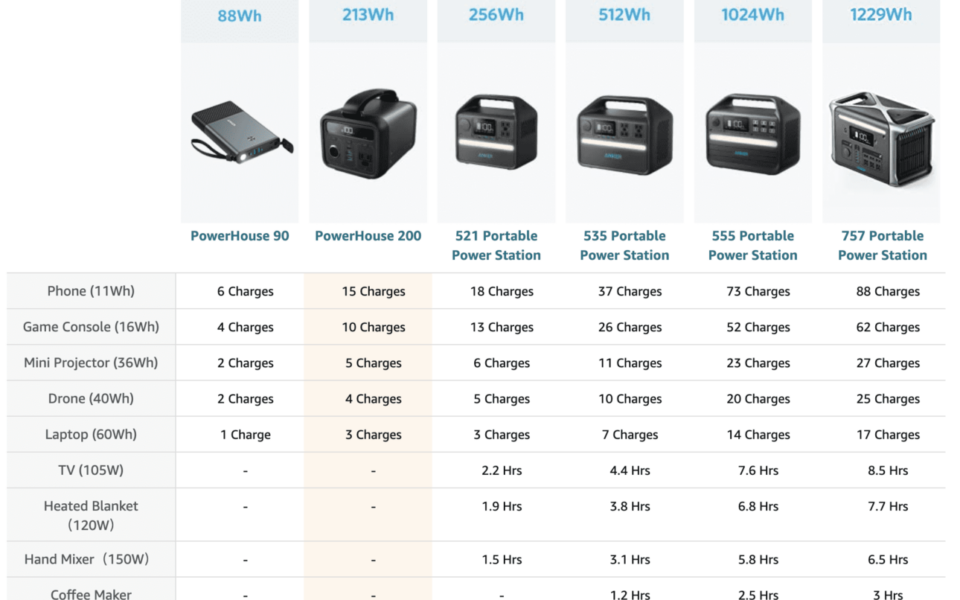
Battery Capacity: Measured in watt-hours (Wh) for larger systems. Higher capacity means more power storage but typically increased weight and cost. The preferred capacity range for most consumer applications falls between 500Wh to 1,500Wh. [5]
Output Options: USB-A, USB-C, AC outlets, and DC car ports provide flexibility for different device charging needs. Verify that output types match your devices.
Thermal Design and Heat Management: Heat is a primary factor affecting inverter and battery pack longevity. Excess fan noise often indicates thermal management challenges. Consumers should look for clear operating temperature ranges and stable fan behavior under load. [6]
Solar Input Range: Charging reliability depends on proper panel voltage and current matching with the station's input limits. Published solar input voltage range, maximum current, and maximum watts inform compatibility decisions. [6]
Build Quality Considerations
– Construction materials: Impact resistance and durability affect long-term value
– Inverter technology: Silicon Carbide (SiC) inverter approaches offer high conversion efficiency and lower thermal loss, reducing thermal stress during long runtimes and heavy loads [6]
– Cable quality: Integrated cables should be durable and replaceable
– Port protection: Weather-resistant features if outdoor use is intended
Understanding Technical Specifications
Reliable power station comparisons require attention to specific technical indicators:
– Capacity (Wh): Total energy storage available
– Continuous and surge output (W): Power delivery capabilities
– Charge rates: How quickly the unit can be recharged
– Battery chemistry: Affects weight, cycle life, and performance characteristics
– Cycle life: Number of charge/discharge cycles before capacity degradation
How Review Organizations Evaluate Products
Verification and Scoring Methods
Established review platforms employ structured methodologies to assess portable power products:
Spec Analysis: Reviewers pull real specifications from manufacturer datasheets—including capacity, continuous and surge output, charge rates, battery chemistry, and cycle life—and normalize them for fair comparison. [4]
Weighted Scoring: Each model receives a composite score based on performance, value, build quality, and real-world usability. Scores are weighted by use case, meaning a camping-focused pick is evaluated differently than a home backup pick. [4]
User Feedback Integration: Reviewers aggregate owner reviews from multiple platforms to capture real-world issues that specifications alone cannot reveal: noise levels, app reliability, and warranty experience. [4]
Independence Standards: Credible review organizations maintain strict separation between editorial content and commercial relationships. Understanding whether reviews accept payment for rankings helps consumers assess objectivity. [4]
Distribution Channels
The online distribution channel is the fastest-growing segment in the U.S. portable power station market due to its wider reach, convenience, and access to product variety. Consumers increasingly prefer shopping online for electronics, especially high-tech products like power stations, where detailed specifications, customer reviews, and comparison tools aid decision-making. E-commerce platforms offer competitive pricing, promotions, and fast delivery, attracting both tech-savvy and remote-location buyers. [3]
Retail channels—including electronics stores, outdoor recreation retailers, and home improvement centers—offer in-store experience zones where consumers can touch and test devices. This channel accounts for a major share in North America, especially for first-time buyers who benefit from hands-on evaluation before purchase. [5]
Making Informed Purchasing Decisions
Questions for Consumers
Before purchasing a portable power hub, consumers should clarify:
1. What specific devices do I need to power, and for how long?
2. Do I need solar charging capability for off-grid applications?
3. Will I need to charge multiple devices simultaneously?
4. How important is portability versus capacity for my use case?
5. What warranty and support options does the manufacturer offer?
Red Flags to Avoid
– Products with no verifiable manufacturer information
– Sellers without clear contact information or return policies
– Extremely low prices that seem unrealistic for stated specifications
– Lack of any safety certifications for electrical products
– Reviews that appear promotional rather than balanced
Verification Steps
Before purchasing:
1. Verify pricing on official manufacturer websites and authorized retailers
2. Confirm specifications directly with manufacturers
3. Check third-party reviews from established consumer advocacy organizations
4. Review actual certification documentation (UL listings, FCC registrations)
5. Compare specifications across multiple reputable sources
6. Understand return policies before purchasing
Conclusion
The portable power hub market offers increasingly sophisticated solutions for American consumers seeking reliable backup power, outdoor energy access, and professional applications. Market growth projections indicate continued expansion through the decade, driven by weather-related grid challenges, outdoor recreation trends, and technological advancement. [2][5]
Consumers benefit from rigorous product evaluation frameworks that verify specifications, aggregate user feedback, and maintain editorial independence. By understanding their specific power requirements and carefully evaluating product capabilities against verified information, purchasers can make decisions that deliver reliable performance when power needs arise.
—
Sources
[1] MarketResearchFuture. "Portable Power Station Market Size and Forecast 2035." https://www.marketresearchfuture.com/reports/portable-power-station-market-10079
[2] DataIntelo. "12V DC Power Hub Market Research Report 2033." https://dataintelo.com/report/12v-dc-power-hub-market
[3] Yahoo Finance/ResearchAndMarkets. "U.S. Portable Power Station Market Research Report 2025." https://uk.finance.yahoo.com/news/u-portable-power-station-market-083000250.html
[4] BackupPowerHub. "Best Portable Power Stations (2026) | Reviews, Comparisons." https://backuppowerhub.com
[5] StrategicMarketResearch. "Portable Power Station Market Research Report, Industry Analysis." https://www.strategicmarketresearch.com/market-report/portable-power-station-market
[6] UDPOWER. "What Is the Most Reliable Portable Power Station?" https://udpwr.com/blogs/portable-power-station-knowledge/what-is-the-most-reliable-portable-power-station
—
*Note: Readers should independently verify all product-specific claims, pricing, and specifications before making purchasing decisions. Our editorial process requires evidence-based verification, and claims are distinguished from general guidance throughout this article.*