Affiliate AI — Step-by-Step Tutorial for Marketers
Key Takeaways
- AI tools like ChatGPT and Claude can streamline affiliate content creation by handling research, outlining, and initial drafting while you provide expertise and personal insights
- Expected time savings typically range from 30-50% once you develop effective workflows, though results vary based on experience and content type
- Success requires treating AI as a drafting assistant, not a replacement for your knowledge, voice, and editorial judgment
- Always maintain proper FTC disclosures for affiliate relationships and consider disclosing AI assistance for transparency
- Focus on adding unique value—personal testing results, specific experiences, and original analysis—that AI cannot replicate
Introduction
You have been staring at a blank screen for two hours, trying to write another product review. The affiliate links are in place. The traffic is slowly growing. But creating enough quality content to actually scale your earnings feels impossible. Meanwhile, you keep hearing about marketers who use AI to pump out articles in half the time. You are wondering if that approach actually works or if it will destroy your rankings and reputation.
This tutorial exists because you need a clear, no-nonsense path forward. You want to know exactly which AI tools actually help affiliate marketers, how to set them up without breaking your existing workflow, and most importantly, how to use them without looking like every other generic content farm. The goal is simple: use AI to handle repetitive tasks while you focus on what actually matters, which is providing genuine value that makes people trust your recommendations enough to click your links.
What follows is a practical, step-by-step guide to integrating AI into your affiliate marketing business. Each step includes specific actions you can take today, examples you can copy directly, and warnings about pitfalls that catch most beginners. By the end, you will have a complete system for using AI as a productivity accelerator while maintaining the authenticity that makes affiliate marketing actually work long-term.
Why AI Is a Game-Changer for Affiliate Marketers
Before diving into tools and tactics, you need to understand exactly what AI can and cannot do for your affiliate business. This distinction matters because it determines whether AI becomes a valuable asset or an expensive distraction.
What AI Actually Does Well
AI excels at pattern recognition, content drafting, and data organization. When you feed it a product name and basic specifications, it can generate a structured review outline in seconds. When you ask it to identify common questions people ask about a product category, it can pull those insights from its training data. When you need multiple variations of an email subject line for testing, AI can generate them instantly. These capabilities translate directly into time savings on the tasks that eat most of your content creation hours.
Many affiliate marketers report meaningful productivity gains when integrating AI effectively into their workflows. While specific results vary based on the type of content, your level of expertise with AI tools, and how thoroughly you edit outputs, experienced users often find they can produce content more efficiently once they have established effective prompt libraries and editing processes. Estimates from various industry sources suggest productivity improvements ranging from 30-50% are common for established workflows, though individual results will vary.
Where AI Falls Short
AI does not have personal experience with products. It cannot tell you that a particular camera feels awkward in your hands or that a software interface changes so frequently that the free version becomes frustrating after three months. It cannot build genuine trust with your audience. It cannot develop a unique voice that makes readers return to your site instead of generic alternatives.
Most critically, AI generates content based on patterns in its training data. This means it often produces safe, generic responses that do not stand out. If you publish raw AI output, you are competing with every other affiliate marketer using the same tools, which leads to content that looks the same and ranks poorly because search engines cannot distinguish your work from hundreds of identical articles.
The Right Mental Model
Think of AI as a highly capable research assistant who has read millions of articles but has never actually used any of the products you are reviewing. You would not let that assistant publish an unedited review claiming expertise they do not have. But you would absolutely use them to gather product specifications, identify common pain points, draft initial structure, and organize your thoughts into a publishable format. That is exactly how successful affiliate marketers use AI.
Essential AI Tools for Affiliate Marketing Success
The AI tool landscape changes constantly, but the categories that matter for affiliate marketing remain stable. Here is what you actually need, organized by function, with honest assessments of each option. Pricing and features should be verified directly with each provider as offerings evolve frequently.
Content Generation and Drafting
ChatGPT (Free and Plus tiers) — The most versatile option for beginners. The free tier handles basic drafting, outline generation, and ideation. The Plus version offers faster responses and access to GPT-4, which produces noticeably better content for nuanced topics. Use it for first drafts, content outlines, and generating multiple variations of copy.
Claude (Free and Pro tiers) — Anthropic’s offering excels at longer-form content and maintaining consistent tone across documents. Many affiliate marketers find Claude produces more natural-sounding content for reviews and comparisons. The free tier is generous enough for most beginners to start testing.
Jasper — A purpose-built content platform with templates specifically designed for marketing copy. The affiliate marketing templates help with product descriptions, social posts, and email sequences. The higher price point makes sense only once you are producing significant content volume regularly.
Other options worth exploring include Copy.ai and Writesonic, which offer similar capabilities with varying pricing structures and feature sets. Testing a few options during free trial periods helps determine which interface best matches your workflow.
SEO and Content Optimization
Surfer SEO — Integrates AI with real-time SERP analysis. It analyzes what currently ranking pages have in common and tells you exactly what to include in your content to compete. The AI features help generate content briefs and suggest improvements, but the core value is the data-driven guidance.
Clearscope — Similar positioning to Surfer SEO with a focus on content readability and topical comprehensiveness. Both tools help you understand search intent at a deeper level than keyword research alone.
Frase — Another content optimization tool that uses AI to help with brief generation and content outlines based on SERP analysis. Comparing features and pricing across these tools helps determine which fits your specific needs best.
Automation and Workflow Integration
Zapier or Make — These automation platforms connect AI tools with your existing workflow. You can set up systems that automatically save AI drafts to your CMS, create tasks when AI generates content, or push content to social platforms on schedule. They do not have AI built in, but they let you automate the boring parts of using AI tools.
Notion AI or similar workspace integrations — If you already use Notion or similar tools for project management, the built-in AI features handle drafting and organizing without switching between applications.
Getting Started Recommendations
For absolute beginners, start with ChatGPT free tier and Claude free tier. Use both for a month to understand their different strengths. Once you have a consistent workflow and know exactly what you need, consider upgrading to Jasper if you are producing content daily, or stick with free options if you are creating content weekly. The paid tools save time, but understanding your actual needs first prevents wasting money on features you will not use.
Step 1: Setting Up Your AI-Assisted Affiliate Marketing Stack
Before creating any content, you need to establish the infrastructure that lets AI tools connect to your existing workflow. This initial setup eliminates the friction that causes most people to abandon AI tools within weeks.
Connecting Your Content Management System
Your CMS is where content lives. Whether you use WordPress, Webflow, Squarespace, or another platform, you need AI tools that work within your existing environment or can easily transfer content to it.
For WordPress users, several plugins integrate AI directly into the post editor. Options like various WordPress AI plugins let you draft, edit, and publish without constantly switching between browser tabs. The specific plugin matters less than having a consistent process for moving AI drafts into your CMS.
Create a dedicated folder or workspace in your CMS for AI drafts that are not yet published. This prevents accidentally publishing unedited content and lets you batch your editing work separately from your AI drafting sessions.
Linking Your Affiliate Programs
Different affiliate platforms have different levels of integration capability. Understanding what data you can access helps you plan realistic workflows.
Amazon Associates provides product APIs with specific terms regarding automated content generation. You can use AI to help draft reviews based on your own research and testing, but automated content that pulls prices and availability directly from Amazon feeds requires careful attention to program policies. Always review the current Amazon Associates Program Operating Agreement directly for the latest requirements, as policies evolve.
CJ Affiliate and ShareASale offer varying levels of data access depending on your advertiser relationships. Some advertisers provide product feeds you can analyze with AI for comparison content. Others restrict how their product data can be used. Review each program’s terms before building automated systems.
The practical approach: use AI for content creation but keep affiliate link management manual or through dedicated plugins until you have specific technical expertise. Your link placement, cloaking, and tracking matter too much to automate blindly.
Integrating SEO Tools
If you use any SEO tools already, connect them to your AI workflow before creating content. Surfer SEO and similar tools work best when you pull their keyword and structure recommendations before drafting, not after. This way, your AI-assisted drafts are optimized from the start instead of requiring major revisions later.
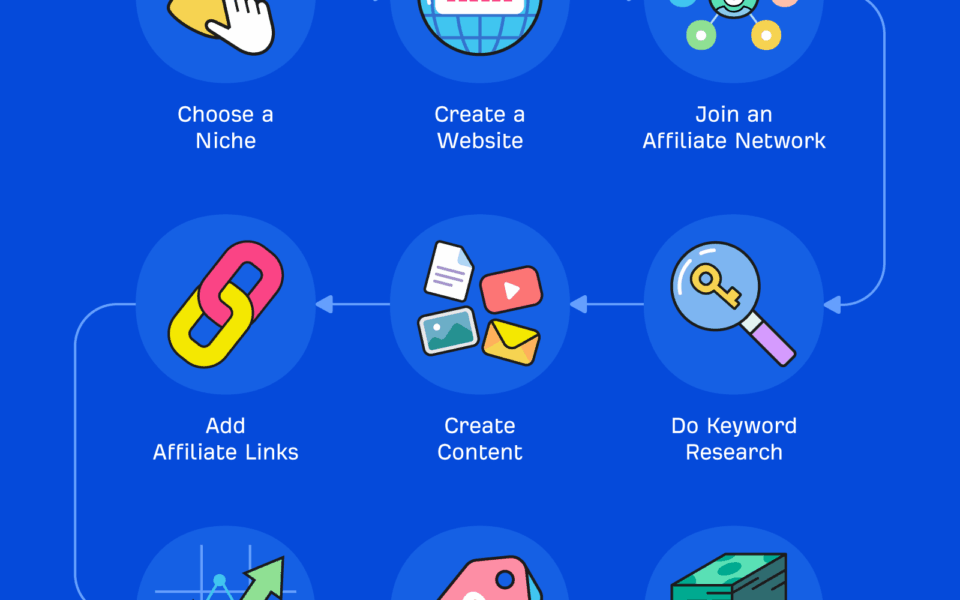
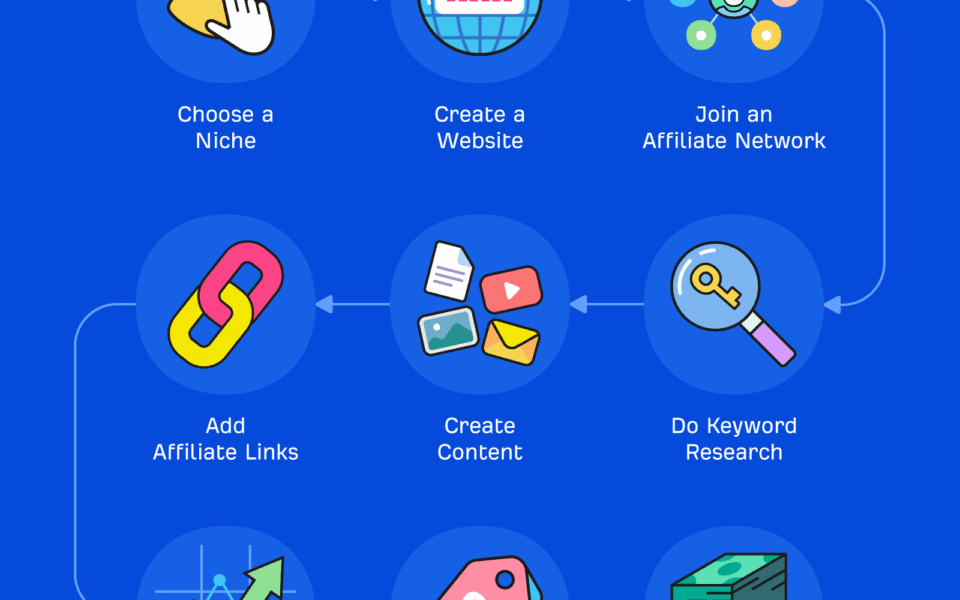
Set up a simple workflow: keyword research first, then AI-assisted drafting, then SEO tool review, then editing. Trying to optimize afterward creates twice the work.
Step 2: Using AI for High-Converting Affiliate Content Creation
Product reviews, comparisons, and roundups form the backbone of most successful affiliate sites. This is where AI provides the most direct time savings, but it is also where poor AI usage destroys content quality fastest.
Creating Product Reviews with AI Assistance
The key to effective AI-assisted reviews is combining AI structure with personal expertise. Here is the process that works:
Research phase: Use AI to gather basic product information, identify common questions people ask, and find comparable products in the category. Ask ChatGPT something like, “What are the most commonly cited pros and cons for [product name] according to online reviews? What questions do buyers typically ask before purchasing?”
Structure phase: Use the AI research to build your review outline. A typical high-converting review structure includes: an honest verdict upfront, key specifications, detailed analysis of main features, comparison with alternatives, pros and cons based on actual use cases, and final recommendation for specific audiences.
Drafting phase: Use AI to generate first-draft content for each section, but do not copy-paste directly. Instead, use AI output as a starting point, then add your own analysis. The AI might draft: “The camera offers 24.2 megapixels, which is competitive for its price range.” You add: “In practice, the 24.2 megapixel sensor performs well in daylight but shows noise above ISO 1600. For landscape photography, this resolution provides excellent detail for large prints.”
The difference is specificity and context that only comes from actual product knowledge or thorough research beyond what AI provides.
Building Comparison Content
Comparisons require more precision than single-product reviews. AI helps organize information but struggles with nuanced comparisons that actually help readers decide.
Use AI to create comparison tables from product specifications. Then manually fill in the qualitative differences. The AI might tell you Product A has a 5000mAh battery while Product B has 4500mAh. Only you can determine if the real-world difference matters for your audience’s specific use case.
For roundup posts where you recommend the best option in a category, use AI to identify the top contenders and their key differentiators. Then actually test or thoroughly research each option before making recommendations. Publishing a roundup without real testing is where most affiliate sites fail their readers.
Prompt Templates That Actually Work
The difference between useful AI output and generic garbage comes down to your prompts. Here are templates you can use directly:
For research: “I am writing a review of [product] for [target audience, e.g., beginner photographers]. What are the 5 most important factors this audience considers? What are common complaints mentioned in online reviews? What questions do they typically ask before buying?”
For structure: “Create a detailed content outline for a comprehensive review of [product]. Include sections for overview, key features, pros, cons, alternatives, and verdict. For each section, provide 3-5 talking points that would help a reader make an informed decision.”
For first draft: “Write a first draft of the [specific section, e.g., performance section] for a [product] review. Tone should be conversational but informative. Include factual information about [specific feature] and explain how it compares to competitors where relevant.”
Always specify tone, audience, and purpose. Generic prompts produce generic content.
Step 3: AI-Powered Keyword Research and SEO Optimization
Keyword research determines whether your content ever gets found. AI has genuinely changed this process by making it faster to generate ideas, analyze search intent, and optimize existing content.
Finding Keywords with AI Assistance
Start with seed keywords related to your niche. Ask AI to generate related long-tail variations by saying something like: “Generate 30 long-tail keyword variations for [main keyword] related to [specific use case or audience]. Focus on questions and comparison searches.”
AI is useful for brainstorming but not for validating search volume or competition. Use dedicated SEO tools like Ahrefs, SEMrush, or Google Keyword Planner for the data side. AI generates ideas; your SEO tool validates whether those ideas are worth pursuing.
Understanding Search Intent
AI helps you understand what people actually want when they search. Ask AI to analyze a keyword by saying: “What is someone likely looking for when they search [keyword]? What questions do they want answered? What decision are they trying to make?”
This analysis prevents the common mistake of creating content that targets a keyword but misses the actual intent. A search for “best running shoes” wants recommendations. A search for “how to choose running shoes” wants a buying guide. Same general topic, completely different content needed.
Generating Content Briefs
Create a template for content briefs that includes keyword targets, recommended structure, questions to answer, competing pages to analyze, and word count targets. AI can draft these briefs quickly once you have the template established.
Your brief template should include: primary keyword, secondary keywords, target word count, recommended subheadings based on SERP analysis, questions to answer, internal linking opportunities, and unique angle notes. AI helps you fill in each section quickly, but you still need to review and customize based on your specific knowledge and goals.
Meta Description and Title Optimization
AI generates strong meta descriptions efficiently. Provide the AI with your article’s focus and ask for variations that balance comprehensiveness with the typical display length in search results. While Google has expanded snippet display in some cases, aim for concise descriptions that clearly communicate value while leaving room for search engines to display relevant portions dynamically.
For title tags, provide your primary keyword and ask AI to generate options that include it naturally. Test different approaches over time to see which drive higher click-through rates in your analytics.
Step 4: Automating Email and Social Media Promotion with AI
Creating great content means nothing if nobody sees it. AI can significantly reduce the time spent on promotion while maintaining consistency and quality.
Email Sequence Creation
Email remains one of the highest-ROI channels for affiliate marketers. AI helps create sequences that would otherwise require hiring a copywriter.
For welcome sequences, use AI to draft emails that introduce your site, establish expertise, and naturally incorporate relevant affiliate recommendations. The key is making AI-generated emails feel personal, not broadcasted. Ask AI to write in first person, include specific examples, and maintain a conversational tone.
Subject line testing benefits enormously from AI. Generate 10-15 variations for each email and test them systematically. AI might suggest angles you would not have considered, like urgency-based subjects, curiosity gaps, or benefit-focused headlines.
Example prompt: “Write 10 email subject lines for an email about [specific product or topic]. Include a mix of urgency, curiosity, and benefit-focused approaches. Keep each under 50 characters.”
Social Media Content Generation
Different platforms require different approaches. AI can adapt your content for each platform but cannot replace understanding platform-specific best practices.
For Twitter/X: Generate threads that break down your content into digestible points. Each tweet should stand alone while contributing to a larger narrative. Ask AI to create a thread outline from your blog post, then write individual tweets that each provide value without requiring the reader to see the whole thread.
For Pinterest: Focus on pin copy that encourages clicks. AI can generate multiple variations of pin descriptions optimized for search within Pinterest. Test pinning at different times and track which descriptions drive the most saves and clicks.
For LinkedIn: If your affiliate niche is B2B, AI can help adapt technical content for LinkedIn’s professional audience. Focus on insights and data points that establish credibility rather than direct promotional content.
Engagement and Community Management
AI helps draft responses to comments and messages, but never automate engagement entirely. Your audience can tell when responses feel generic, and authenticity matters more than volume.
Use AI to draft response templates for common questions, then customize each response before sending. This saves time while maintaining the personal touch that builds community.
Step 5: Quality Control and Maintaining Authenticity
This step separates affiliate marketers who build sustainable businesses from those who burn out, get penalized, or alienate their audiences. AI-generated content without human oversight is generic content that provides no competitive advantage.
Fact-Checking AI Outputs
AI frequently includes inaccurate specifics. It might state that a product has a feature it does not have, cite incorrect specifications, or make claims that sound plausible but are wrong. Every factual claim in your content needs verification.
Establish a checklist: product specifications verified against official sources, pricing checked for current accuracy, competitor comparisons confirmed with actual product knowledge or published reviews, and any statistics or claims traced to original sources. If you cannot verify something, remove it or clearly qualify it as based on general research rather than specific testing.
Adding Personal Experience Layers
The content that actually converts readers into buyers includes details that only come from real experience. These details transform generic AI drafts into valuable resources.
Where AI might write: “The battery life is impressive.” You write: “During a full-day hiking trip with the GPS tracking enabled, the battery dropped from 100% to about 40%. I was able to use it for navigation throughout without worrying about finding a charger, which is not something I can say about most competitors I have tested.”
If you have not personally tested a product, acknowledge that clearly. Readers respect honesty about limitations. A review based on thorough research plus a clear statement that you have not personally used the product is more ethical and often more useful than a confident claim of hands-on testing that never happened.
Voice and Tone Consistency
AI content tends to sound neutral and slightly generic. Develop a voice guide that defines your brand personality, then edit every piece to match it. Include notes like “conversational but authoritative,” “direct recommendations without hedging,” or “friendly advice from someone who has been there.”
Read your content aloud before publishing. If it sounds like something a real person would actually say to a friend, it probably passes the voice test. If it sounds like it was written by a committee trying to sound professional, revise it.
Staying Compliant: FTC Disclosures and Platform Guidelines
Legal compliance is not optional in affiliate marketing. Using AI does not exempt you from existing requirements, and guidelines regarding AI disclosure continue to evolve. Consult current FTC guidance and legal counsel for your specific situation.
FTC Affiliate Disclosure Requirements
The FTC requires clear disclosure of material connections between affiliates and merchants. This has not changed with AI. If you use affiliate links, you must disclose that relationship clearly and conspicuously.
Standard disclosure language works: “I earn a commission from qualifying purchases made through links in this post at no additional cost to you.” Place this disclosure near your affiliate links, typically at the beginning of content or immediately before the first affiliate link appears.
AI does not change this requirement. You are still responsible for the content, still the affiliate, and still required to disclose the relationship.
AI Content Disclosure
While the FTC has not issued specific rules requiring AI content disclosure in all cases, transparency best practices recommend it. Readers increasingly want to know when content was AI-assisted, and some affiliate programs may have specific requirements.
A simple, honest disclosure works well: “This content was created with AI assistance and thoroughly reviewed, edited, and expanded by [your name].” This acknowledges your use of tools while emphasizing your human oversight and expertise.
Some affiliate programs may require disclosure of AI usage in their terms. Review each program’s policies, particularly as regulations evolve. Google’s guidance on AI-generated content focuses on helpfulness rather than creation method, but maintaining transparency serves both your readers and your long-term credibility.
Platform Terms of Service
Several platforms have policies regarding AI-generated content. Google focuses on content quality regardless of how it was created. Amazon Associates prohibits using their data feeds to automatically generate product descriptions without human review. Other affiliate networks may have specific AI usage policies.
When in doubt, disclose and maintain human oversight. The risk of appearing deceptive far outweighs the minor inconvenience of adding a disclosure note.
Google’s Helpful Content Expectations
Google’s guidance prioritizes content that demonstrates expertise, experience, authoritativeness, and trustworthiness. AI-generated content that provides no original insight, unique perspective, or genuine expertise will struggle to rank regardless of technical SEO optimization.
The algorithm is not penalizing AI content specifically. It is penalizing content that fails to help readers. Use AI to create content that helps readers, not content that exists solely to capture search traffic.
Avoiding AI Content Penalties: Best Practices
Search engine penalties are a real concern for affiliate marketers using AI. The solution is not avoiding AI but using it correctly.
Understanding E-E-A-T Signals
Google’s quality evaluation framework evaluates Experience, Expertise, Authoritativeness, and Trustworthiness. AI-generated content naturally lacks Experience and often lacks demonstrated Expertise.
You demonstrate Experience by: testing products yourself, sharing specific anecdotes, showing real-world results, and noting details only possible through actual use. You demonstrate Expertise by: providing accurate information, making sound recommendations, and showing deep knowledge of your topic. AI can help draft the structure, but only you can provide the expertise and experience.
Creating Content That Adds Value Beyond AI
The test is simple: after removing all AI-generated content, what unique value remains? If the answer is nothing, you have created thin AI content that provides no competitive advantage.
Build content around elements AI cannot replicate: your specific testing results, your personal journey with a product, original research or surveys, expert interviews, case studies from your own experience, and unique perspectives shaped by your specific audience and use case.
Technical Best Practices
Beyond content quality, several technical practices help avoid issues:
- Do not publish AI content that is 100% unedited. Even minimal human review and editing adds value.
- Avoid publishing high volumes of AI content rapidly. A site that goes from 10 to 100 posts in one month using AI will raise flags.
- Maintain consistent publishing patterns. Gradual growth appears natural; sudden spikes suggest automation.
- Use AI as a drafting tool, not a publishing tool. Your final output should always be substantially different from raw AI output.
Pro Tips: Scaling Your AI-Assisted Affiliate Business
Once you have the basics working, you can build systems that let you produce more content without sacrificing quality or burning out.
Building Reusable Templates
Create a library of prompts and templates for your most common content types. A product review template should include your standard structure, typical sections, and go-to questions for that product category. Save effective prompts in a document or spreadsheet so you never start from scratch.
Document what works: prompts that generate useful output, structures that resonate with your audience, and editing approaches that maintain your voice while saving time. This institutional knowledge compounds over time.
A/B Testing AI-Generated Copy
AI can generate multiple variations of headlines, calls-to-action, and promotional copy. Set up systematic testing to determine which approaches work best for your specific audience.
Track click-through rates, conversion rates, and engagement metrics. Over time, you will develop data-driven insights about what resonates. AI handles the generation; you handle the interpretation and decision-making.
Using AI for Analytics Interpretation
AI can help make sense of your analytics data. Paste in a description of your traffic patterns and ask for insights. “My traffic increased 30% this month but conversions dropped 15%. What might explain this disconnect?” AI can suggest hypotheses worth investigating.
Use this for identifying content gaps, understanding seasonal patterns, and prioritizing optimization efforts. AI accelerates analysis but cannot replace your judgment about what matters for your specific business.
Building Scalable Systems
True scaling means increasing output without proportional time investment. This requires systems, not just tools.
Document your workflow from keyword research through publication. Identify bottlenecks and inefficiencies. Automate repetitive tasks that do not require human judgment. Batch similar work together rather than context-switching constantly.
Consider building a simple style guide that ensures consistency across multiple contributors or across content created with varying AI assistance levels. The goal is maintaining quality standards even as volume increases.
Frequently Asked Questions
Will Google penalize my site for using AI-generated content?
Google’s guidance focuses on helpful, people-first content regardless of how it is created. You will only face penalties if AI content provides no unique value, lacks expertise or experience, or exists solely to manipulate rankings. The key is using AI as a drafting aid while adding genuine insights, personal testing, and original analysis.
What are the best free or low-cost AI tools for affiliate marketing beginners?
ChatGPT (free tier) and Claude (free tier) are excellent starting points for content drafting and ideation. For SEO-focused tasks, tools like Surfer SEO or Clearscope offer AI-assisted features. As you scale, Jasper, Copy.ai, or Writesonic provide more specialized templates, but start free to understand your actual needs.
How do I maintain authenticity when using AI for affiliate content?
Never publish raw AI output. Instead, use AI for research, outlining, and first-draft structure, then heavily edit to add personal experiences, actual product testing, unique examples, and your own conclusions. Your readers should get value from your expertise, not feel they could have asked ChatGPT the same question.
Do I need to disclose when I use AI in my affiliate content?
While FTC requirements focus on material connections (affiliate relationships), transparency best practices recommend disclosing AI assistance. This builds trust with your audience and future-proofs your content strategy as regulations evolve. A simple statement like “This post was drafted with AI assistance and thoroughly reviewed by [Your Name]” works well. Some affiliate programs may have specific AI disclosure requirements in their terms.
How much time can AI actually save in affiliate marketing?
Productivity gains vary significantly based on AI skill, content type, niche, and individual workflow. Many affiliate marketers report saving between 30-50% of their content creation time once they have developed effective prompts and editing processes. AI excels at eliminating blank-page syndrome, generating content outlines, and drafting initial versions, but quality control and optimization still require significant human input.
Which affiliate programs work best with AI integration?
Programs with strong API access and comprehensive product data (Amazon Associates, ShareASale, CJ Affiliate) integrate most smoothly. Focus on programs with good product feeds you can analyze with AI for comparison content. Always review program terms regarding AI-generated content, as policies vary and change over time.
What is the biggest mistake affiliate marketers make with AI?
Over-reliance, publishing AI content without substantial human editing or unique value addition. This leads to generic, unremarkable content that fails to rank and does not convert. The second biggest mistake is ignoring compliance—failing to add proper disclosures or violating affiliate program terms with AI-generated promotional material.
Conclusion
AI is a powerful productivity accelerator that can transform your affiliate marketing workflow, but only if you use it ethically and intelligently. The tools and processes outlined in this tutorial give you everything needed to get started or to improve an existing workflow that is not working.
The core principles remain constant regardless of which AI tools you use: AI handles repetitive tasks and drafting while human expertise handles judgment, authenticity, and quality control. Your personal experience with products, your unique voice, and your genuine desire to help readers make informed decisions are what actually builds a successful affiliate business. AI is a tool that makes executing that vision more efficient, not a replacement for the vision itself.
Start with one tool and one specific workflow rather than trying to automate everything at once. Choose a product you already know well, draft a review using the methods above, and publish it after thorough editing. Evaluate what worked, what saved time, and what needs improvement. Then expand to additional tools and workflows based on actual experience rather than theoretical possibilities.
The affiliate marketers who succeed with AI are not those who use it most aggressively. They are those who use it most thoughtfully, always prioritizing their readers’ interests and their own authentic expertise over the temptation to scale content production without substance.
If you found this tutorial helpful, consider subscribing for more practical guides on affiliate marketing tools and strategies. You can also download tested AI prompts specifically designed for affiliate content creation, which includes templates for reviews, comparisons, email sequences, and social media content that you can adapt immediately for your own niche.