Web Reference: In Python this is simply =. To translate this pseudocode into Python you would need to know the data structures being referenced, and a bit more of the algorithm implementation. Some notes about psuedocode: := is the assignment operator or = in Python = is the equality operator or == in Python There are certain styles, and your mileage may vary: 96 What does the “at” (@) symbol do in Python? @ symbol is a syntactic sugar python provides to utilize decorator, to paraphrase the question, It's exactly about what does decorator do in Python? Put it simple decorator allow you to modify a given function's definition without touch its innermost (it's closure). Python slicing is a computationally fast way to methodically access parts of your data. In my opinion, to be even an intermediate Python programmer, it's one aspect of the language that it is necessary to be familiar with.
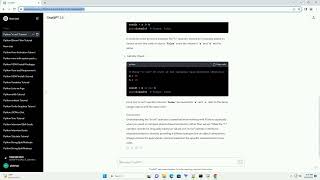
YouTube Excerpt: Download this code from https://codegive.com Title: Understanding the "is not" Operator in Python Introduction: In Python, the "is not" operator is used to check if two objects are not equal based on identity, rather than their values. While the "!=" operator checks for inequality based on values, the "is not" operator checks for inequality based on the memory address or identity of the objects. This tutorial will provide a detailed explanation of the "is not" operator with code examples to illustrate its usage. Syntax: The syntax for the "is not" operator is as follows: Here, object1 and object2 are two objects being compared for inequality. Code Examples: In this example, even though the values of x and y are the same, the "is not" operator returns True because x and y refer to different objects in memory. In contrast to the previous example, the "!=" operator checks for inequality based on values, and in this case, it returns False since the values of a and b are the same. Here, the "is not" operator returns False because both m and n refer to the same integer object with the value of 10. Conclusion: Understanding the "is not" operator is essential when working with Python, especially when you need to compare objects based on identity rather than values. While the "!=" operator checks for inequality based on values, the "is not" operator checks for inequality based on identity, providing a different perspective on object comparison. Always choose the appropriate operator based on the specific requirements of your code. ChatGPT
Download this code from https://codegive.com Title: Understanding the "is not" Operator in Python Introduction: In Python, the "is not" operator...
Curious about Python Is Not Equal To Operator's Color? Explore detailed estimates, salary breakdowns, and financial insights that reveal the true scope of their profile.
color style guide
Source ID: mdNPRCDxMgQ
Category: color style guide
View Color Profile 🔓
Disclaimer: %niche_term% estimates are based on publicly available data, media reports, and financial analysis. Actual numbers may vary.
Sponsored
Sponsored
Sponsored